Quick answer
What this page settles
For a bilingual emcee, the right emcee can deliver every guest follows every moment, with clean language handovers and no side of the room left behind while preventing one language group tunes out, elders or VIPs feel like an afterthought, or clumsy translation makes the room wait. Decide the moments that must go right, send the same details to every candidate, and compare what each quote includes before you choose.
Key planning facts
- Planning focus
- Seamless English–Malay or English–Mandarin hosting so neither side of the room is left out
- Planning output
- A shared brief and run sheet
- Areas covered
- Malaysia, Klang Valley to East Malaysia
- Review point
- A full run-through before the event
Start with the experience the room needs
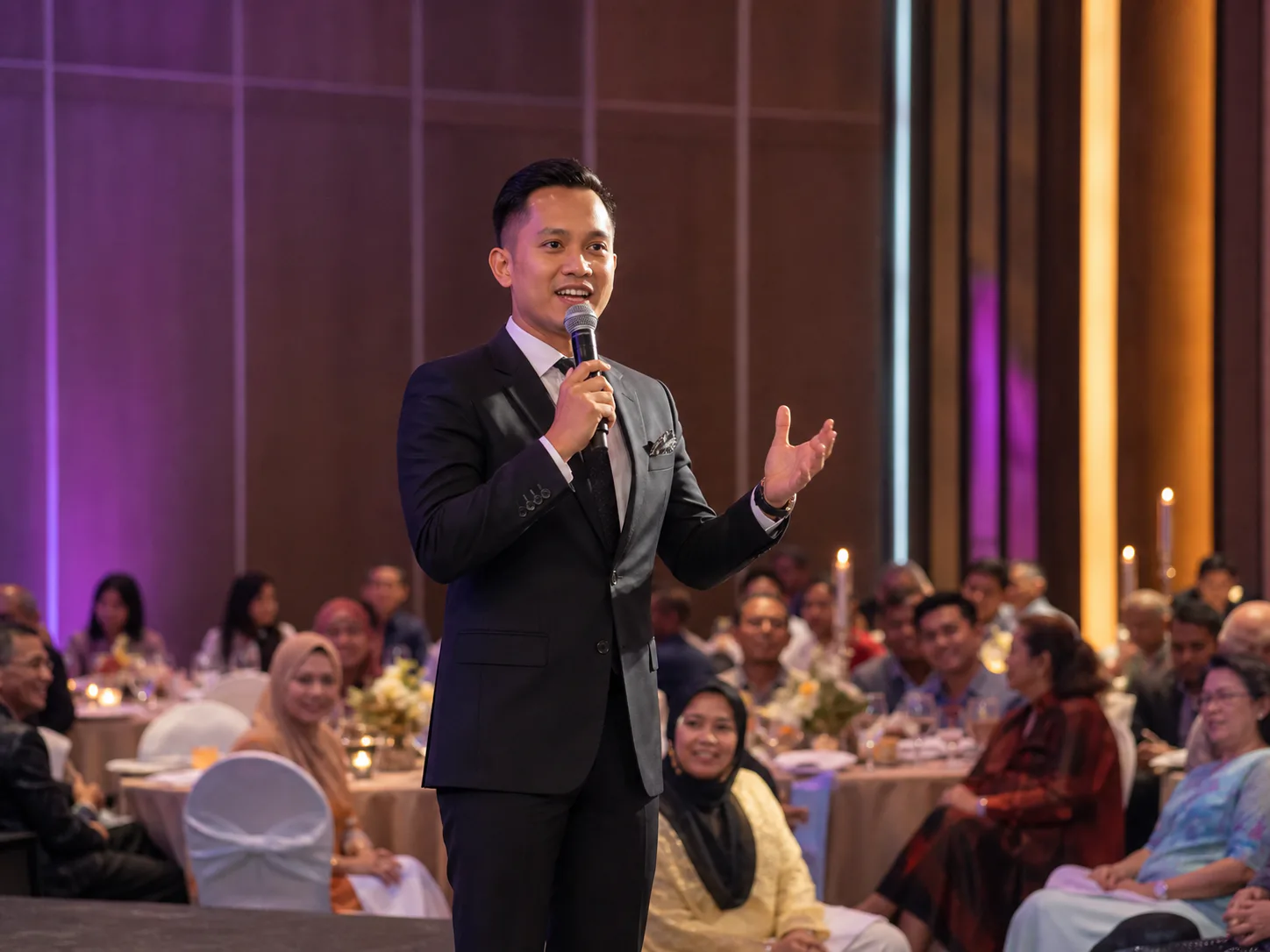
Choosing a bilingual emcee works best when the organiser defines the result before the personality. This event is a multilingual room where every announcement must land in more than one language without slowing the programme. The practical aim is every guest follows every moment, with clean language handovers and no side of the room left behind. The specific focus for this page is seamless English–Malay or English–Mandarin hosting so neither side of the room is left out.
Use the page focus, Seamless English–Malay or English–Mandarin hosting so neither side of the room is left out, to decide which moments need a host, which can remain with the organiser, and what guests must understand without delay.
Name the risks before discussing style
For a bilingual emcee, the main concern is one language group tunes out, elders or VIPs feel like an afterthought, or clumsy translation makes the room wait. Ask how a candidate would prevent that situation, not only how energetic, funny or formal they claim to be.
For a bilingual emcee, put welcome, key instructions, formal segments, guest interaction and the close, each delivered in the right languages into the run sheet. Each one needs a ready signal, one person who can approve changes, and a clear plan if something shifts on the day.
Compare what each quote includes
For a bilingual emcee, a clear quote separates preparation, event-day hosting, travel, changes and a backup plan. Avoid comparing a stage-only price against another quote that already includes script writing and rehearsal, you are not comparing the same thing.
- language split per segment
- names, titles and a pronunciation list
- summary-versus-repeat rule for long speeches
- bilingual script review before the day
See how each emcee handles the hard moments
For a bilingual emcee, look for genuine fluency rather than memorised lines, concise summarising instead of full repetition, and confident name pronunciation across languages. Give every candidate the same realistic situation and compare the decisions they make, the information they ask for, and how clearly they explain the parts that are still unknown. For this page, weigh how each candidate handles seamless English–Malay or English–Mandarin hosting so neither side of the room is left out.
Match language and energy to real guests
For a bilingual emcee, list the audience groups, the language each group understands, and the moments where everyone needs the same meaning. A bilingual or trilingual label is not enough; ask how language will be divided by segment.
For a bilingual emcee, also decide how formal or lively the event should feel, quiet and formal, warm, celebratory, interactive or high-energy. The best emcee is usually the one who can adjust to that, not the one who turns every segment into a performance.
Compare the full quotation, not one number
When you compare options for a bilingual emcee, compare fluency in each language, how they summarise versus repeat, name and title handling, script review in both languages and who owns each cue.
Know when another option may be enough
For a bilingual emcee, one lead language with translated key moments can work when the audience is mostly one language and only a few segments need a second.
Send enough detail for a useful first response
When you enquire about a bilingual emcee, include what is decided and what is still open. A clear first message cuts down on back-and-forth and makes it easier to talk through what you need, who suits it and what it costs.
- date, start and expected finish
- venue, or your city or area
- event type, guest count and audience groups
- languages and preferred tone
- programme outline and must-get-right moments
- budget band and preparation required
Frequently asked questions
What should be confirmed first for a bilingual emcee?
For a bilingual emcee, confirm the event outcome, audience, languages and the fixed moments: welcome, key instructions, formal segments, guest interaction and the close, each delivered in the right languages. These decisions shape what you need more than a personality label.
How should we assess an option for a bilingual emcee?
For a bilingual emcee, use one realistic difficult moment and compare preparation, judgement, language handling and cue communication. For this event, look for genuine fluency rather than memorised lines, concise summarising instead of full repetition, and confident name pronunciation across languages.
What should the quotation include?
For a bilingual emcee, compare fluency in each language, how they summarise versus repeat, name and title handling, script review in both languages and who owns each cue.
Is a professional emcee always necessary?
For a bilingual emcee, one lead language with translated key moments can work when the audience is mostly one language and only a few segments need a second.
What should be prepared before the final walkthrough?
For a bilingual emcee, prepare the current run sheet, confirmed names and pronunciations, media status, who runs each cue, the language plan, what to cut if time runs short, and the plan for a delay or a technical failure.
How much does a bilingual emcee cost in Malaysia?
Rates move with programme length, the number of languages, VIP or protocol handling, rehearsal needs and travel. For a bilingual emcee, the main drivers are welcome, key instructions, formal segments, guest interaction and the close, each delivered in the right languages. Agree one clear brief and send it to every emcee you consider so quotes compare like for like, the price guide shows current planning bands rather than a single fixed fee. On this page, the planning focus is seamless English–Malay or English–Mandarin hosting so neither side of the room is left out.
How long is a bilingual emcee needed for?
Plan the emcee across the whole public programme, not only the minutes on the microphone. A bilingual programme runs as long as the underlying event; the emcee is active across every segment that needs more than one language, so the length depends on the event type rather than the languages. Confirm the run sheet so the emcee keeps clear timing across welcome, key instructions, formal segments, guest interaction and the close, each delivered in the right languages. On this page, the run sheet centres on seamless English–Malay or English–Mandarin hosting so neither side of the room is left out.
When do you not need a bilingual emcee?
You may not need a bilingual emcee for a small, informal gathering with no fixed programme, no formal announcements and no language or protocol complexity, a confident family member or in-house host can carry it. Bring in a professional once the room, the schedule or the programme needs steady timing, clear transitions and someone accountable for changes on the day. On this page, keep seamless English–Malay or English–Mandarin hosting so neither side of the room is left out owned by one person.