Quick answer
What this page settles
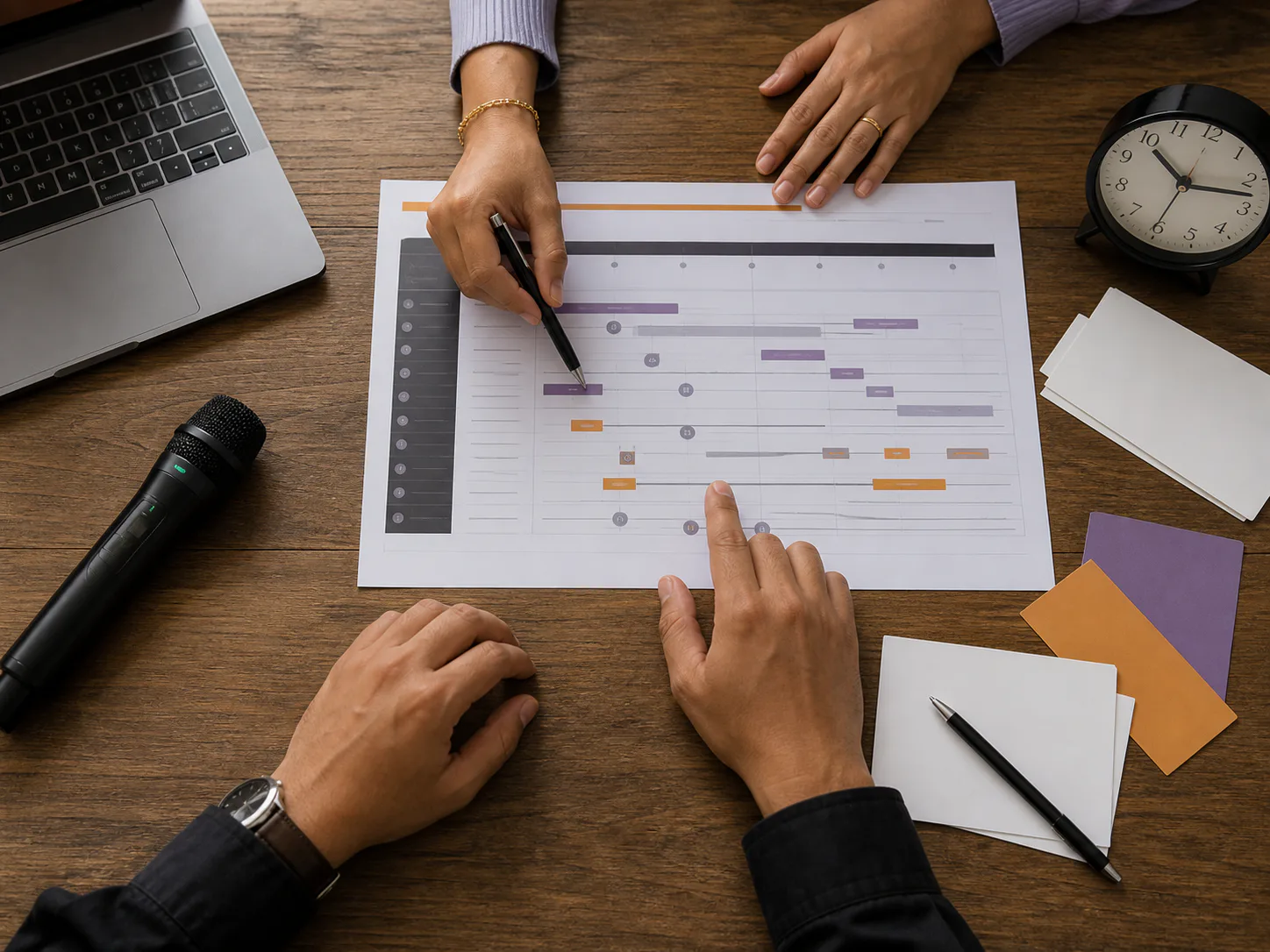
The printed clock starts a readiness check; it does not replace a confirmed go cue. Use this page to create a programme where each audience receives meaning without every line being repeated. The working record is language-by-moment grid, name recordings and approved meaning blocks; the main failure to prevent is line-by-line translation doubling time and flattening emotion.
Key planning facts
- Planning focus
- The on-the-day playbook for bilingual event, from arrival to the final thank-you.
- Planning output
- Decision log and master run sheet
- Areas covered
- Malaysia, Klang Valley to East Malaysia
- Review point
- A full run-through before the event
Arrive to become operational
Call time covers parking, access, briefing, microphone test, sightlines and the first cue check.
Capture that in the master run sheet and give it a named owner.
- a readiness check before doors open
Run from ready signals
The clock starts a check; the cue lead acts only after people and systems confirm.
Note who signs this off and where it lives in the master run sheet.
- a visible go, hold or reset status
Make one live decision at a time
Choose the next public action, the segment that absorbs time and the person who updates teams.
Settle this in the master run sheet before the next decision depends on it.
- a short live change log
Close the programme deliberately
Confirm final guest direction, stage clear, outstanding item and document owner before teams leave.
Capture that in the master run sheet and give it a named owner.
- an actual-time record and follow-up owner
Frequently asked questions
What must be fixed first for Bilingual event: on-the-day playbook?
Fix the welcome, movement instructions and main decision or tribute first because the surrounding preparation depends on it.
Who owns the handovers in Bilingual event: on-the-day playbook?
Name the content owner, language lead, show caller and listener representative and one final go-signal owner.
What is the warning sign for Bilingual event: on-the-day playbook?
Watch for line-by-line translation doubling time and flattening emotion. Settle who decides what to do about it before you write any script.
What belongs in the working document?
Keep language-by-moment grid, name recordings and approved meaning blocks so the team can confirm each item directly.
When is this guide complete?
When every output has an owner, a review time and a home in the master run sheet.