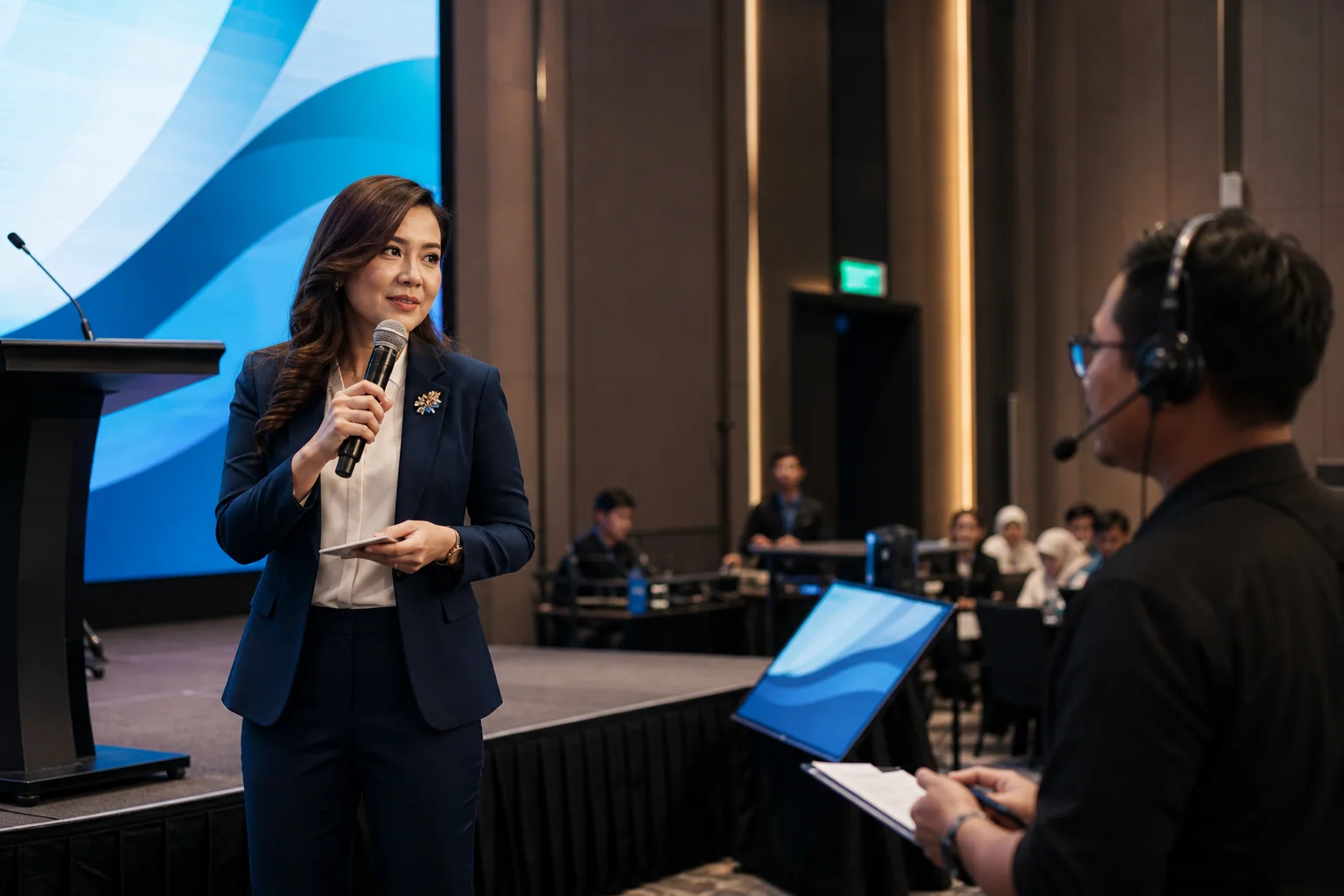
Quick answer
What this page settles
A role title is not enough; each handover needs a ready signal, receiver and fallback. Use this page to create a business programme where every speaker and transition supports the outcome. The working record is message hierarchy, introductions, deck status and session cutoffs; the main failure to prevent is speaker overruns and late deck changes diluting the central message.
Key planning facts
- Planning focus
- Who owns what during corporate event: team roles and clean handovers.
- Planning output
- Decision log and master run sheet
- Areas covered
- Malaysia, Klang Valley to East Malaysia
- Review point
- A full run-through before the event
Map the operating roles
List who decides, prepares, operates and only needs information for each major moment.
Capture that in the master run sheet and give it a named owner.
- a one-page responsibility matrix
Define the handover, not just the role
State the ready signal, receiver, fallback and point where control passes.
Note who signs this off and where it lives in the master run sheet.
- a cue-by-cue handover table
Use one live decision channel
Consolidate client, venue and production messages before they reach the host.
Settle this in the master run sheet before the next decision depends on it.
- a named show caller and backup contact
Brief each role at its altitude
Give leaders decisions, operators cues and guests directions; not everyone needs the master file.
Capture that in the master run sheet and give it a named owner.
- role-specific extracts from one master source
Frequently asked questions
What must be fixed first for Corporate event: team roles and handovers?
Fix the opening address, main content block and closing commitment first because the surrounding preparation depends on it.
Who owns the handovers in Corporate event: team roles and handovers?
Name the programme owner, speaker manager, production lead and venue contact and one final go-signal owner.
What is the warning sign for Corporate event: team roles and handovers?
Watch for speaker overruns and late deck changes diluting the central message. Settle who decides what to do about it before you write any script.
What belongs in the working document?
Keep message hierarchy, introductions, deck status and session cutoffs so the team can confirm each item directly.
When is this guide complete?
When every output has an owner, a review time and a home in the master run sheet.