Quick answer
What this page settles
Most local events involve protocol-led programmes, precinct travel and formal arrival sequences. Build the call time, arrival notes and cue plan around Precinct 1, then confirm the venue-specific details during the walkthrough.
Key planning facts
- Planning focus
- Protocol-led programmes, precinct travel and formal arrival sequences
- Planning output
- Arrival note and venue checklist
- Areas covered
- Malaysia, Klang Valley to East Malaysia
- Review point
- A full run-through before the event
Planning an event around Precinct 1
Treat the stated start time as the moment the room is ready, with the emcee already parked and briefed. Around Precinct 1, send a pin for the correct entrance, the supplier access point and the room or ballroom name.
Around Precinct 1, put separate arrival guidance in the guest invitation, supplier brief and VIP note, because each group may use a different entrance or time window.
Use the walkthrough to remove uncertainty
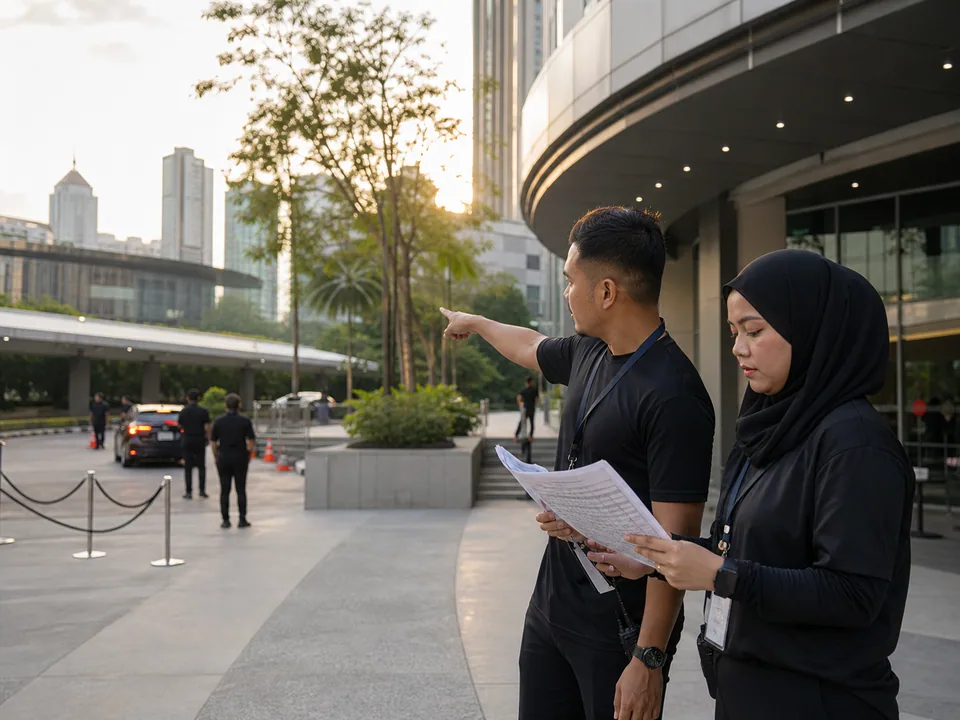
At the Precinct 1 venue, let protocol and coach arrivals shape the walkthrough. Stand where the emcee will stand. Check sightlines to entrances, screens, award tables, musicians and the person giving cues. Walk the route for VIPs, speakers and photo groups, then note the time each movement takes.
Test the working microphone at speaking volume. Confirm the spare microphone, playback source, lectern position, stage access and how the emcee receives a last-minute change.
- Exact room, floor and entrance
- Supplier parking and load-in window
- Stage access and holding position
- Cue giver and backup communication method
Choose a programme rhythm for the local event mix
Protocol-led programmes, precinct travel and formal arrival sequences. That mix calls for an emcee who can move between clear instructions and warmer audience moments without making every segment sound the same.
For Precinct 1 banquet events, coordinate stage activity with meal release. For conferences and launches, coordinate with speaker readiness, screen content and media positions. For formal functions, settle protocol order and salutations before script polishing.
What to put in the brief
A useful brief for your event starts with clear decisions about Protocol-led programmes, precinct travel and formal arrival sequences. State the date, venue area, guest count, programme objective, languages, key people and the person who can approve changes.
For your event, attach the working run sheet while it is being refined. Write the planning priority at the top of the brief: Protocol-led programmes, precinct travel and formal arrival sequences. Then mark fixed moments, flexible segments, pronunciation notes, media cues and anything that stays off the microphone.
- Event purpose and desired final impression
- Audience groups, languages and accessibility needs
- Names, titles, roles and pronunciation recordings
- Stage, sound, screen and music responsibilities
- Change authority and the event-day contact chain
Questions worth settling before the event
For your event, strong planning questions show how the host thinks when the room changes. Assess the process, judgement and delivery style against this event priority: Protocol-led programmes, precinct travel and formal arrival sequences.
- Which programme moments need the firmest time control?
- How will language switches be signposted without repeating every line?
- What is the recovery plan for a late speaker, delayed meal or technical pause?
- Who gives the final go-ahead for entrances, videos and announcements?
Frequently asked questions
How early should an emcee arrive for an event in Putrajaya?
Set the call time from access, soundcheck and briefing needs, then add a travel buffer for Precinct 1. The emcee should be ready before doors open.
What local detail belongs in the emcee brief?
Include the exact entrance, room, parking or rail guidance, venue contact, supplier access and any event-day traffic condition around Precinct 1.
What should the organiser send before discussing Putrajaya emcee planning hub?
Send the date, venue area, audience, language mix, programme window and the two moments that need the strongest control. Add the current planning focus: Protocol-led programmes, precinct travel and formal arrival sequences.
How do you choose a suitable emcee for Putrajaya emcee planning hub?
For Putrajaya emcee planning hub, compare how each emcee prepares, who handles which language, their judgement at transitions, how they run cues, travel timing and who is responsible for changes. Ask every candidate to talk through the same difficult moment.
What should be rehearsed for Putrajaya emcee planning hub?
For Putrajaya emcee planning hub, rehearse entrances, names, media cues, microphone handovers, movement and the agreed response to a delay. The rehearsal is complete when each cue has one visible ready signal.